
Remote work trends 2026: From AI co-pilots to asynchronous output, uncover the top 5 urgent strategies every freelancer needs to survive and thrive.
The change to working remotely is not a trend, but rather just the beginning. If you are working out of a home office or a coworking space in a crowded tech mecca or a quiet seaside cafe where you can clear your mind, you should not get too comfortable.
We’re clearly on a path to experience an enormous inflexion point by 2026. The shift is not just a question of “where” we work, but goes to the heart of changing “how” and even “when” we work.
Among freelancers who are competitors in high-quality global markets (of whom there will be vast numbers), the next couple of years will separate self-sufficient performers from those squeezed by automation and fierce competition. We’ve parsed new data to bring you the key trends shaping the future today.
Here’s what the freelance landscape looks like as of 2026, and how to make sure you are on the right side of the trend.
1. Remote Work Trends 2026: The Rise of Asynchronous Output
Go back to when the pandemic was still young. Unending video calls that attempted to translate 9-to-5 office life into digital form. That model is dying fast.
By 2026, the most successful telecommuting models won’t care when you log on; they will care only about what you get done. We are witnessing a clear move from synchronous work (everyone working in real time) to asynchronous work models.
Why it matters to you: Clients in alternate time zones—for example, a Western client hiring an Eastern developer—are finding out that they’re not going to work effectively if times do not overlap. The future holds sway for independent people who can take one brief, execute perfectly on their own timeline, and not need a hand held the whole way through to deliver results.
If your current value prop is the ability to be “available for quick chats” throughout the entire day, you are screwed. You have to change your mentality away from “selling hours” and instead to “selling outcomes.” Learn asynchronous communication (Loom, well-written documentation, and clear project management updates) to make yourself known without being in the room.
2. The AI Co-Pilot: Not Your Replacement, But Your Replacement Already Installed
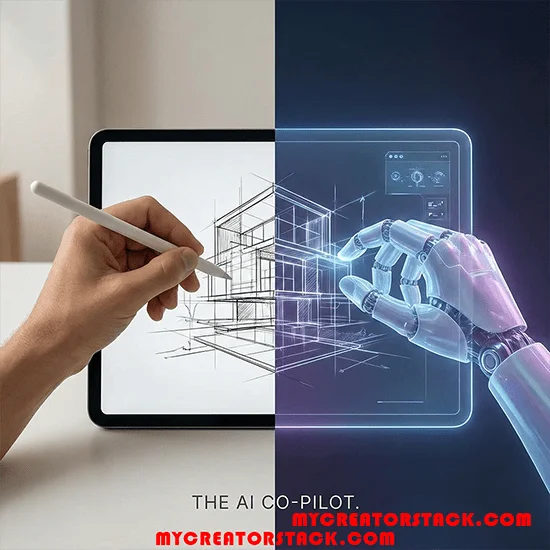
The fear-mongering headlines are overselling it: AI isn’t going to take your freelance job away completely. But a freelancer now who is skilled in the use of AI to be able to do said work will eat your lunch, so to speak.
AI has already seen extensive integration into day-to-day workflows in software engineering and creative freelancing. By 2026, the ability to use AI won’t just be a “nice-to-have” skill; for much of the workforce, it will be mandatory in order to remain relevant and employed.
Your 2026 play: Stop resisting, start integrating. Wherever you are on the spectrum, though, whether you’re a writer using AI for rapid research or a developer using something like GitHub Copilot to help power through writing code, you need to be able to prove that your tool use allows you to produce faster, better, and (sometimes) cheaper results than someone working manually (GitHub).
Be the human expert in how to use the AI, bringing the quality, strategic relevance, and human understanding that an algorithm can’t deliver.
3. The Age of the Hyper-Specialist (Generalists, Your Time Is Nigh)

Jack of all trades, master of none. The ‘jack of all trades, master of none’ is dangerous in an increasingly globalised remote market. Why hire a plain marketer when you can get one specifically for a “B2B SaaS SEO for Fintech”?
The trends also show a push for niche specialisation, especially in high-demand tech such as cybersecurity, data science, and specialised AI implementation. The bigger the market is, the more focused you need to be on your niche in order to succeed.
Whether mastering vector software or AI website builders, you must niche down.
How to prepare: Assess your skills right now. If you are wide, it is time to go deep. Find a sector that’s growing worldwide (green tech, biotech, comprehensive AI compliance) and become the undisputed expert on that tiny sliver of the market. Experts can charge more and have less competition.
4. Soft Skills Are the Hard Currency of the Future
In a screen-, algorithm, and asynchronous text-update-driven world, the human touch was never more important.
You could be the best coder in the universe, but if you can’t write a clear message that deals with complex ideas or demonstrate emotional intelligence when a shitstorm hits, clients will have your head. The need for those kinds of freelance workers with excellent “soft skills,” or the kind that require communication, adaptability, and proactive problem-solving, is booming.
The data on remote work are becoming clearer: they are encouraging, mainly because the gains in working at home seem to outweigh the downsides. To bridge that gap is a premium service.
Actionable advice: Over-communicate. Be proactive rather than reactive. Instead of simply sending a deliverable, send along a short video explaining what you did and where things are headed next. Be the low-friction, high-empathy co-worker that stressed-out managers want to work with.
5. The ‘Work From Anywhere’ vs. Hybrid Divide

Though many freelancers dream of the pure “digital nomad” life — working from a beach in some tropical paradise — the corporate reality is tilting toward a more structured hybrid model for their employees.
What does this have to do with freelancers? This is because it’s the way your clients run. Big companies, meanwhile, are embracing hybrid models that mix work-from-home days with in-office team building. They’ll need to hire freelancers who get that — who can plug into the workflow of an onsite team without missing a beat, even from miles (or states) away.
On top of that, the real “Work From Anywhere” model is growing into a niche. Companies are finding that as they scale up their global workforces, they must navigate a complex web of international tax and labour laws. For example, for freelancers, removing obstacles for international clients to pay and manage you (it might just be well-integrated tools or clear contract templates) results in a powerful competitive advantage.
Conclusion:
The numbers tell a tale of their own: remote work is trending toward expansion and adulthood. The chaotic, reactionary days of the 2020s are in the rearview mirror, and the coming years – 2026 and beyond – will be marked by efficiency and AI-driven workflows.
For freelancers, the global opportunity is massive. To find a place in the coming years, it’s critical to focus on output-based performance, leverage AI as a tool, enhance your skills, and hone your communication skills as a human being.
The wave is coming—paddle out now.
(Disclaimer: The information given in the article is for information purposes only, and the information is based on personal opinions and research. MyCreatorStack is not responsible for any decisions made based on the information given in the article. The links given in the article are affiliate/advertising links.)

Sandaru is a senior graphic designer with over 5 years of experience in brand identity, digital design, and creative workflows. He founded Mycreatorstack to help designers and freelancers navigate AI tools, design software, and the evolving creator economy — without the hype.
Leave a Reply