Stop relying on generic chatbots. Discover the most powerful niche AI tools for creators in 2026 to upgrade your video, design, and writing workflows.
Cut to the chase.
A few years back, entering a prompt in ChatGPT and receiving a coherent paragraph in return was akin to magic.
Well, we’ve finally achieved saturation.
The party trick of entering a prompt in ChatGPT and receiving a coherent paragraph in return is now ubiquitous. If your entire creative process depends on a generalist LLM, your end product will look, sound, and feel like everybody else’s.
In 2026, the cutting edge is not about whether or not you use AI in your creative process. It’s about how you use it. The most successful creators—those with large audiences and sustainable businesses—are no longer relying on the blunt tool of generalist chatbots. To stand out, you need to master the best niche AI tools.
They’re building an advanced AI stack.
The reason for this is that generalist models are inherently mediocre. They’re designed to be adequate for all users, which means they’re interesting to none.
The alternative is a set of specialized niche AI tools that are trained on precise datasets to produce precise results. They don’t merely summarize content; they understand the nuances—cinematic color grading, the psychological effect of a high-converting headline, or the rhythm of a professional voiceover.
The key to rising above the noise in 2026 is specialization. Here are the essential categories in the 2026 creative AI stack.
1. The Visual Vanguard: Design & Branding Beyond the Prompt
We’ve all seen the telltale signs of generic AI art: the glassy eyes, the weird compositions, and that distinctive “Midjourney” look that screams, “I threw this together in five seconds.”
Even as foundational models like Midjourney and DALL-E have become astonishingly good, the actual power for professional designers is found in niche AI tools that extend and augment existing workflows rather than replacing them outright.
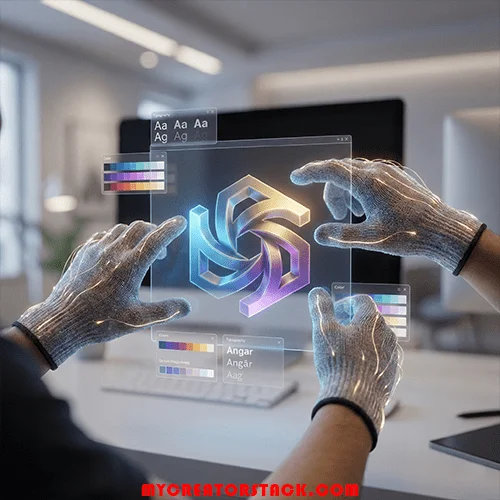
We’re moving from “text-to-image” to “sketch-to-masterpiece.” The greatest designer tools of 2026 are limitless creative companions, providing micro-control—allowing you to change a photo’s lighting but keep the composition, or create brand-new vector assets that are immediately editable using standard design software.
Why it matters: branding is built on consistency, and chaotic image generators are ill-suited to deliver it. Branding AI can, however, learn your exact hex codes, font hierarchies, and visual motifs, ensuring everything looks authentically “you,” not just authentically “AI.”
2. The 10x Video Workflow: Repurposing and Avatars
Video is still king when it comes to content, but the cost of producing it can be astronomical. This may be where niche AI tools can provide the greatest ROI.
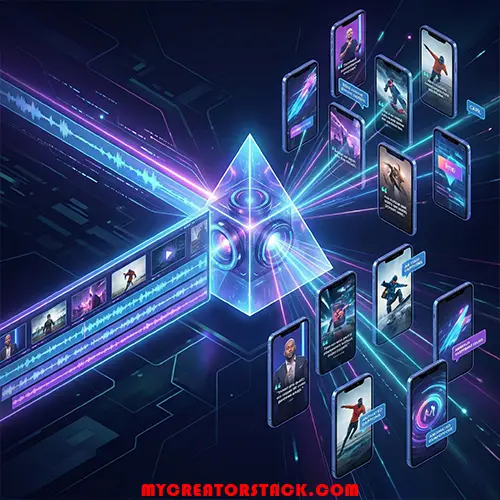
Instead of spending hours listening to a one-hour podcast and trying to find three good clips to make a TikTok video, you do not need to do it manually anymore. Now, advanced AI systems can detect sentiment, viral potential, and hooks in video transcripts and generate ideal, franchisable, captioned short-form vertical videos out of an extended one. They do not simply chop up the video; they curate it depending on the way viewers interact.
Finally, talking-head video may be one of the most revolutionary areas where AI can help. Gone are the days when talking-head video avatars looked like they were programmed by a committee of robots. Today, specialized video systems from 2026 can create hyper-realistic digital avatars with perfect lip sync and naturalistic expressions. These systems have become essential for video creators who need to produce daily educational or corporate videos without having to set up cameras and lighting every day.
3. The Sonic Boom: Audio and Voice Synthesis with Niche AI Tools

Audio is a uniquely personal form of media, and our hearing is incredibly sensitive to detecting anything artificial. Text-to-speech is the voice of a GPS navigator, while specialized audio AI has the feeling of a live show.
The state-of-the-art AI suite includes tools for voice synthesis, which offer unparalleled levels of control over the emotional and rhythmic aspects of speech. We’re not selecting between “Voice A” and “Voice B.” We’re hiring a digital voice actor to deliver a tone that’s “authoritative yet empathetic” or “excited yet whispery.”
But outside of voiceover work, specialized AI is changing the world of audio engineering. Podcasters now have niche AI tools to automatically remove filler words, equalize levels, and even generate contextual background music that surges and subsides based on the conversation’s intensity.
4. The Strategic Edge: Writing, SEO, and Research
Yes, ChatGPT can certainly write a blog post. But writing a blog post that not only gets on the first page of Google but also maintains a unique voice consistent with the brand’s writing is rarely accomplished on the first try.
The toolset of the professional writer has changed. We now have access to research assistants that not only avoid “hallucinating” facts, but also read live databases, summarize complex scholarly articles, and format citations.
As for SEO, we are no longer concerned with keyword stuffing. We now have niche AI tools that analyze the best content from competitors to find semantic and structural opportunities. They do not simply write content; they design content that succeeds in search engines according to the realities of the current algorithm. It is a tool that helps you ensure you are creating viable digital content, not just writing words.
5. The Back-Office Revolution: Legal, HR, and Organization
Creativity does not thrive in a bureaucratic system. The most overlooked benefit of the AI revolution has been its ability to manage the “boring stuff” that keeps the creator’s business afloat.
If you are a solopreneur or run a lean creative agency (like the solo CEO model we recently discussed) , you don’t have the luxury of dedicating resources to an entire HR and legal team. Enter the realm of specialized niche AI tools.
- Legal: AI helps you review freelance contracts and catch unusual clauses or risks in plain language.
- HR: AI helps create inclusive job descriptions to recruit collaborators and even analyze communication patterns to prevent burnout.
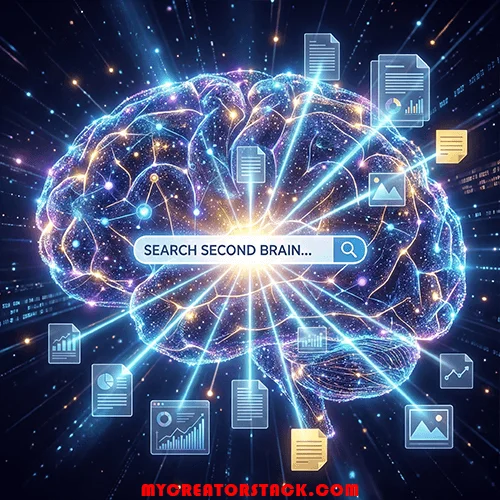
- Organization: Forget the messy file system with folders and subfolders. AI-powered workspaces have something called semantic search. You don’t have to remember the name of the file you are looking for; you tell your “second brain” what you are looking for—“the assets from that client meeting last Tuesday about the blue logo.” The AI gets it.
Conclusion: Curate Your Toolkit
The age of the AI generalist is passing into history, and the age of the AI specialist has yet to begin.
Using a single massive chatbot in 2026 is like trying to build a house with nothing but a sledgehammer. You might make an impact, but it won’t be pretty.
The most successful artists of the future will be master curators. They’ll experiment and integrate various specialized tools to create a customized system that highlights their individual genius. Don’t try to be part of the masses and create average work. Explore the niches, build your stack of advanced niche AI tools, and create work that’s unmistakably yours.
(Disclaimer: The information given in the article is for information purposes only, and the information is based on personal opinions and research. MyCreatorStack is not responsible for any decisions made based on the information given in the article. The links given in the article are affiliate/advertising links.)

Sandaru is a senior graphic designer with over 5 years of experience in brand identity, digital design, and creative workflows. He founded Mycreatorstack to help designers and freelancers navigate AI tools, design software, and the evolving creator economy — without the hype.
Leave a Reply