
Stop renting your creative brain from Big Tech. Discover why open-source AI gives creators ultimate freedom, privacy, and control over their work in 2026.
We have welcomed big tech advertising for the last several years. They created shiny tools like chatbots that write poems in seconds and image generators. We have given them our information. We shared our data and creative processes to get in.
It was incredible. Until the moment when we noticed that we were mere guests in the house of another person.
The veil of the closed-source AI age is beginning to crack as we enter 2026. Creators, developers, and businesses are finding themselves in a bleak realization that by basing their entire systems on proprietary, black box models of AI, they are simply leasing intelligence. You cannot control the prices, you have no voice in the censorship filters, and you have no idea how the sausage is made.
If the API goes down your business ceases operation. If the service conditions vary, your creative workflow is gone.
Something exciting is happening right now beyond the massive tech giants. The open-source AI scene has grown into a vibrant, buzzing community of creators and builders. It’s no longer just an alternative path; it’s quickly becoming the go-to choice for anyone who truly wants creative freedom. It’s simply more flexible and adaptable than the closed systems.
It is not merely software; but it is power relations. Creative intelligence has a bright future that is open, decentralized, and in your control.
The Problem with the “Black Box” vs. Open-Source AI
If you’re working with a closed model, such as the most popular chatbots and image generators that get the most press, you’re basically working with a finished product. You input a prompt, and you get a response from the cloud.
While it’s certainly convenient, there’s something about it that feels very unfulfilling. There’s a moat of intellectual property protection surrounding these models. You can’t see the training data, you can’t see the code, and most importantly, you can’t customize the basic operation of the model.
Guardrails, as I mentioned, are necessary, but for creative purposes, they often manifest as extreme censorship and bland results. If you want to be innovative, explore unusual topics, or craft a very particular kind of brand voice, the one-size-fits-all solution offered by Big Tech’s AI solutions quickly becomes a creative straightjacket.
And let’s not forget the issue of trust. How can you build your next big thing on top of something you’re not allowed to inspect? As these models become more and more central to our work, the lack of transparency in these black boxes becomes an unacceptable business risk.
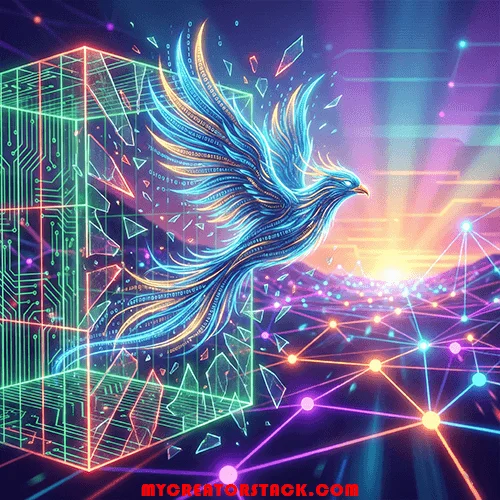
The Open-Source Explosion: Power to the People
With open-source AI, the game is completely different. The fundamental principles of open-source AI—which are transparency, cooperation, and openness—are evident in everything.
With open-source AI, the model isn’t just a product; it’s a resource for the community. Real open-source AI means the model’s weights, which are the learned parameters that give the model its power, are available. It means there’s transparency about the model’s training data and the capability to run the model on your hardware of choice or a cloud platform of your choice.
While a few years ago, open-source AI was significantly behind its massive, corporate-backed counterparts, the gap has been closing at an unprecedented rate. With the power of a global community of innovators working at a speed and pace that no corporation could match, the likes of Llama, Mistral, and the Stable Diffusion family of models are achieving results comparable to the closed giants.
What Creative Freedom Actually Looks Like in 2026
The move to open-source artificial intelligence means the following for you as a creator or entrepreneur in 2026:
- True Customization (Fine-Tuning): With closed models, you are stuck with “prompt engineering”—trying to get the AI to do what you want. With open-source AI, you can fine-tune a model with your data. A writer can fine-tune an AI writing model with her last ten novels to get it to emulate her style. A design agency can fine-tune an image AI to incorporate its visual style. You are not just using an AI; you are using an AI to create something that is bespoke to your creative DNA. (This unique DNA is exactly why human creators will always beat generic AI).
Privacy and Control: Do you manage important intellectual property or private client information? Would you be prepared to expose it via a web interface? You can run open-source AI locally on your computer or on a private server, ensuring the security and integrity of your data.
No More Censorship Surprises: When you control an AI, you determine what it can and cannot do. While it is still important to use AI responsibly, open-source AI allows you, as a creator, to define what is appropriate for your work—not some corporate terms of service.
Navigating the Noise: Defining “Real” Open Source
A word of caution as we embark on this new frontier: with open-source AI becoming more mainstream, there has been a rise in “open-washing,” where companies use the term to gain marketing muscle, yet keep the most critical elements locked away.
We need to understand what is actually being opened up. Groups such as the Open Source Initiative (OSI) are working tirelessly to set very stringent standards for what constitutes open-source AI. Freedom comes from being able to access the model parameters and enough information regarding the data to understand its limitations and biases. Don’t be fooled by “semi-open” solutions that still keep you locked into one vendor.
Conclusion: Own Your Future
The next few years will define the relationship between humanity and artificial intelligence. The question is: do we choose a world in which creative intelligence will be just another utility owned by a few gargantuan monopolies, or do we aim for a world in which it’s owned by all people everywhere?
By 2026, the best creators won’t be those using expert prompting. They will be those using open-source AI models to build things Big Tech would never dream of. It’s time to stop renting your tools. It’s time to start owning them. The door to the cage is open. The time to fly has arrived.
(Disclaimer: The information given in the article is for information purposes only, and the information is based on personal opinions and research. MyCreatorStack is not responsible for any decisions made based on the information given in the article. The links given in the article are affiliate/advertising links.)

Sandaru is a senior graphic designer with over 5 years of experience in brand identity, digital design, and creative workflows. He founded Mycreatorstack to help designers and freelancers navigate AI tools, design software, and the evolving creator economy — without the hype.
Leave a Reply