
Discover why custom typography is a strategic digital asset in 2026. Learn how unique fonts build brand identity and create profitable income streams.
By 2026, the digital landscape will have changed quite drastically. The proliferation of generative AI tools has led to the democratization of image creation, resulting in a “saturated” environment where unique brand assets are scarce. This has led to an environment where typography has moved beyond being a digital design feature to a core business feature. As a brand, a custom font is a unique voice that cannot be replicated by competitors. As a digital entrepreneur, specializing in custom fonts is a major pivot away from a time-based business model to an asset-based business model.
This article will discuss why custom fonts have become a highly valuable digital asset, how they benefit the client’s business, and how digital entrepreneurs can capitalize on this trend to create a scalable and profitable income stream.
The 2026 Landscape: Why Generic Won’t Cut It
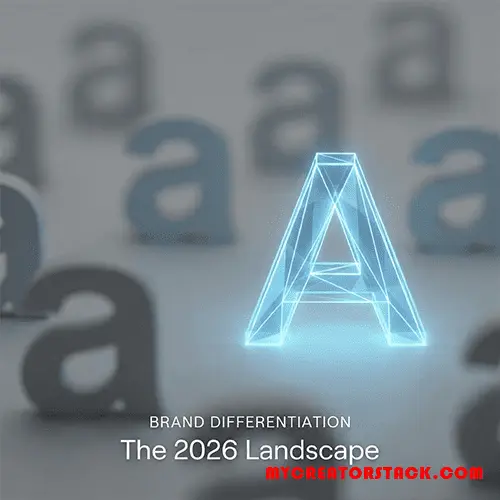
In the past, businesses could prosper with a plethora of free and low-cost stock fonts. Yet, with the increasing immersion of digital experiences, from the web to mobile to spatial computing, the limitations of stock fonts have become glaringly obvious.
Look at how hundreds of startups use the same free sans-serif fonts. They basically disappear into the background. Since everyone picks the same look, nobody stands out.
It’s a real problem.
By 2026, I think being genuine will be the most valuable thing a company can offer. You can’t just copy what everyone else is doing. Your brand needs a visual identity that is totally consistent. It has to be recognizable everywhere someone sees your work. You know what I mean? Otherwise, you’re just noise.
Although artificial intelligence is adept at creating unique images, it is still not adept at creating cohesive, functional, multi-weight fonts with high technical standards. That is where a premium role for human typography comes in, where artistic ability meets precision.
The Strategic Value of Custom Typography for Brands

In explaining custom typography to a client, it is imperative that you also explain the business benefits associated with custom typography. Clients want custom typography for a variety of business reasons.
- Unparalleled Brand Differentiation and Ownership
This means that the custom typography is fully owned by the brand. While the competition can also use the same fonts, the custom typography will remain unique to the brand. It can convey the personality of the brand even before the logo appears. This kind of ownership can create a long-term competitive advantage for the business. In a competitive environment where the use of imagery can sometimes appear the same, the custom typography will make the business stand out in a way that can’t be replicated by the competition. - Cost Efficiency and Licensing
Font and image licensing can be a costly and legally complex affair for a business. Fonts are usually licensed based on the number of users or web traffic. This represents a business uncertainty that can affect a business that grows very fast. Custom typography may be expensive at the outset, but it offers a business a license to use its custom typography for all eternity and on all platforms. There are no more costs or licensing fees to buy. - Technical Optimization and Cross-Platform Use
Stock fonts are not optimized for all languages and can have many characters that are not used. They can also fail to have the characters that a business that operates in multiple languages needs. Custom typography offers a business optimization for different uses. A custom font can be optimized for web use and another optimized for high-resolution display. Custom typography can also be optimized for emerging platforms such as Augmented Reality/Virtual Reality and Dashboard Displays.
The Business Shift for Designers: From Service to Asset
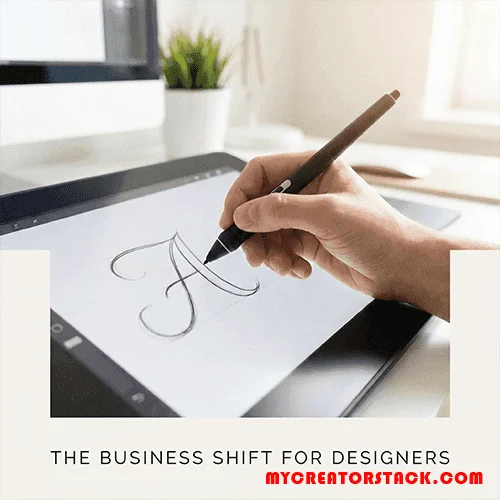
For freelance designers and other creative entrepreneurs, typography is a different business model altogether.
Turning a new font into your expertise creates a scalable digital product. Suddenly, instead of being able to work with only one client at a time, you have the ability to work with more clients and create long-term value. A custom font is often the starting point for a long-term business partnership that extends beyond just that initial design and into other areas.
Typography changes your business model from being short-term to long-term.
Essential Tools for Modern Type Design (A Balanced View)
Special tooling is required for entering type design, and the tooling needed varies based on your skill level and the complexity of your design.
- Professional Standard (Examples: Glyphs, FontLab):These are powerful and industry-standard software for creating fonts.
- Pros: They have extensive feature sets for working with complex scripts. They have features for working with kerning and creating variable fonts.
- Cons: They have a higher learning curve and are more expensive.
- Entry-Level & Plugins (Examples: Fontself for Illustrator): These are software plugins for creating fonts from vector shapes in Adobe Illustrator.
- Pros: They have a lower learning curve and use your existing knowledge of working with vectors.
- Cons: They may not have features for working with complex scripts and multiple weights for professional fonts.
Common Mistakes in Creating and Selling Fonts
If you wish to be successful in the field of typography as a digital product, there are several common pitfalls to watch out for:
- Prioritizing style over legibility: The basic responsibility of a font is to be readable. If the style gets complicated to the point where the font is no longer easily readable, then the market potential of the font is compromised.
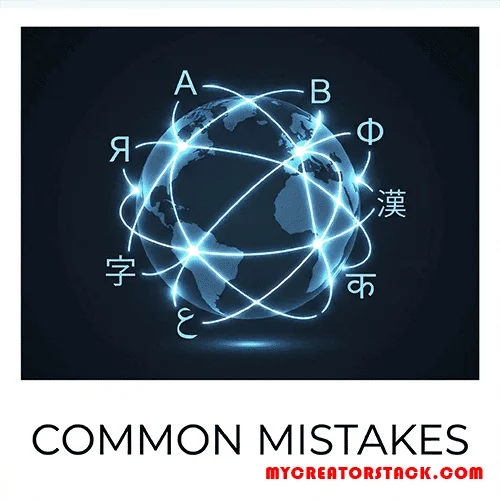
- Not catering to the global market: If the font does not support accents and different forms of punctuation, then the market is limited to the English-speaking audience.
- Lack of clear license agreements: Selling fonts to the retail market without clear End User License Agreements (EULAs) is a fast track to losing money.
Conclusion
As digital content continues to grow in 2026, the need for unique and owned brand assets has never been more pronounced. Custom typography is at the intersection of art, tech, and business strategy. It can be a business strategy for brands, where they can invest in unique and owned assets, and a path for designers to make sustainable digital assets in a world where specialization is increasingly rewarded.
(Disclaimer: Any mention of specific software tools does not constitute endorsement, and achieving financial success in the field of type design relies on skills, demand, and business execution.)
Frequently Asked Questions (FAQ)
Q: What are firms looking for in custom typography in 2026?
A: They want exclusive ownership, avoiding ongoing license costs, and consistency in new digital media channels.
Q: How does custom typography enable a designer’s business model?
A: Custom typography enables designers to break away from their service-based business model into digital product-based business, in addition to their relationship with clients.
Q: Is AI replacing human typography designers?
A: AI can create images, but it cannot create functional, cohesive, and multiple-weight typography, so human typography designers are still needed.

Sandaru is a senior graphic designer with over 5 years of experience in brand identity, digital design, and creative workflows. He founded Mycreatorstack to help designers and freelancers navigate AI tools, design software, and the evolving creator economy — without the hype.
Leave a Reply