
Discover why building a Micro-SaaS for creators is the ultimate business pivot in 2026. Learn how to turn your audience into monthly recurring revenue today.
Over the last five years, the formula for digital independence has been surprisingly consistent: find a niche, post relentlessly on social media, build a following, then monetize that following through brand sponsorships, online courses, or freelance work.
It was a fantastic formula—until it wasn’t.
Now, however, as we continue into 2026, the old creator economy is facing a significant problem. Platforms are limiting organic reach for paid ads, people are fed up with subscribing to multiple services, and the sheer amount of AI-generated content is making it difficult to get noticed. Creators are quickly realizing they’ve been building on rented land, where a single change in an algorithm completely erases their income.
This anxiety has prompted a massive, yet invisible, migration. The most forward-thinking digital entrepreneurs aren’t just worried about their future; they’re not even thinking about viral fame anymore. They’re aiming directly at the real holy grail of online business: Monthly Recurring Revenue (MRR).
And they’re not creating another newsletter to get it. They’re creating software businesses. Meet the new era of the Micro-SaaS for creators.
The Death of the Technical Barrier
In order to understand why this shift is happening now, we need to look at the collapse of the technical barrier to entry.
For a long time, if your background was purely in graphic design, your path to scale was tightly constricted. You could sell UI/UX templates or take on more complex freelance work, but building a real, working software application was out of the question. Unless you also spent years at a university studying computer science and mathematics, or had the funds to hire a costly team of backend developers, your ideas would remain just that: ideas.
By 2026, this barrier no longer exists.
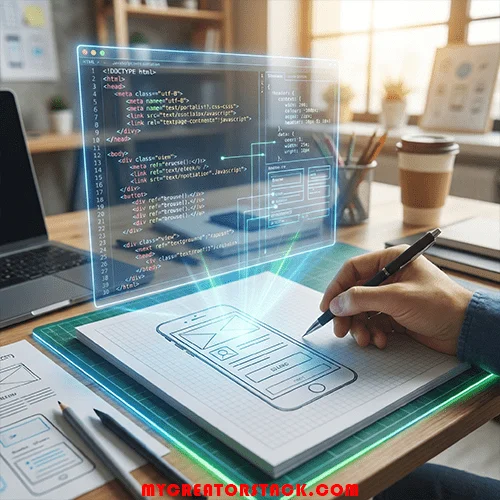
Because of the advent of sophisticated, agentic AI coding assistants, the traditional notion of “building software” no longer applies to building a Micro-SaaS for creators. You don’t have to be a senior full-stack engineer to get started. You could be a newcomer just learning the basics of Python or someone with a purely visual design background. The AI will bridge the gap.
You bring the logic, the user experience, and the look and feel; the AI brings the code, debugging, and deployment. In this world, taste, industry knowledge, and design are the differentiators. The code is simply a commodity created by your digital assistant.
What Exactly is a Micro-SaaS for Creators?
When people think of software companies, they tend to think of Silicon Valley unicorns, venture capital, and large office campuses. This is the exact opposite of what a Micro-SaaS for creators actually is.
A Micro-SaaS is a software application that is extremely focused on solving one specific problem for a particular group of people.
- It’s not trying to become the next big CRM like Salesforce. It’s trying to become the absolute best invoicing solution for freelance wedding photographers.
- It’s not trying to change the way businesses around the globe conduct supply chains. It’s a software application that solves the problem of automated compliance for independent restaurants.
Because it’s so small in scope, one individual can actually run the entire application. The costs are essentially negligible. This means that a Micro-SaaS for creators doesn’t need to acquire ten thousand customers to be a success.
If you can create a software application that solves a super-niche problem for one type of professional and saves them 10 hours a week, it’s perfectly viable to charge $50 a month. With just 200 customers, it’s possible to make a six-figure income. This is something that can actually be achieved by someone who knows how to market themselves online.
Rather than wasting hours scouring P/E ratios to find the ideal stock to invest in, the modern creator is finally realizing that creating a software application is a much more lucrative investment of their time and money

The Creator Advantage: Distribution is King
So why is a Micro-SaaS for creators perfectly poised to dominate the space? Well, the reason is that in the world of software development, creating the product is only 20% of the battle; the other 80% is getting people to use it.
Software development gurus may create an incredible product, but launch it into the world with a chorus of crickets chirping back at them as a response. Then, unable to attract users for their product, they’re forced to rely on expensive paid advertising, which defeats the purpose of making money in the first place.
Well, as a creator, you’ve essentially won the toughest business challenge: distribution.
If you’ve spent the last two years creating a blog, a YouTube audience, or a devoted following on X (Twitter) around digital marketing topics, you’ve got an audience that trusts you when you recommend things to them. So when you launch a Micro-SaaS for creators that fixes a problem your audience gripes about every single day, you won’t have to worry about a marketing budget; your content will be your marketing.
What a wonderful self-sustaining feedback loop that is: your content brings in users for your software, your software brings in recurring revenue, and the recurring revenue lets you quit freelance work to make more content that brings in more users for your software.
3 Profitable Micro-SaaS Blueprints for 2026
If you’re thinking of making a transition from a creator to a founder, where do you even begin? The answer is to look at what you dislike the most, what you consider to be friction points. There are three archetypes that will be prevalent in 2026, and they are as follows:
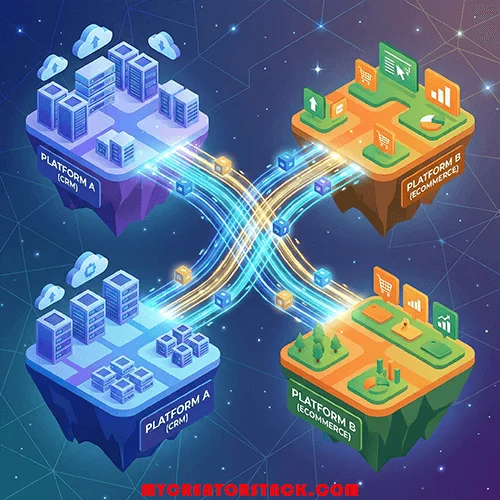
1) The Connector Tool: Find two popular platforms that do not integrate well. For example, a project management tool for a particular niche, such as an accounting tool. Create a simple, automatic bridge between these two systems, saving businesses a tremendous amount of time entering data manually.
2) The Industry-Specific Clone: find a broad, popular, and beloved software concept, then make it extremely specific to an industry. For example, an appointment scheduler is not uncommon, but an application for mobile pet groomers, considering time, pet size, and breed, will win the hearts of pet groomers everywhere.
3) The Productized AI Wrapper: identify a daily, complex, and time-consuming process for prompting an AI, then build a simple, intuitive, and easy-to-use interface for the user. If you know the secret to prompting an AI to create perfect, SEO-optimized product descriptions for Etsy sellers, don’t sell an e-book about it. Build a simple web app where the user can paste in the product photo, click a button, and the app will use the AI in the background to create the perfect product description.
The Final Pivot: From Renting to Owning
The creator economy is finally reaching a new level of maturity. Digital creation is no longer a hobby or a popularity contest.
We are entering an era of extraordinary leverage. We have the tools to create world-class software today. All we need is a laptop and a vision. The only thing holding us back is the mental hurdle of stopping being a content creator and starting to be a digital architect.
Algorithmic platforms are a gamble for attention, but owning your own Micro-SaaS for creators allows you to own your platform, your customers, and your financial future. The code is waiting. It’s time to build.
(Disclaimer: The information given in the article is for information purposes only, and the information is based on personal opinions and research. MyCreatorStack is not responsible for any decisions made based on the information given in the article. The links given in the article are affiliate/advertising links.)

Sandaru is a senior graphic designer with over 5 years of experience in brand identity, digital design, and creative workflows. He founded Mycreatorstack to help designers and freelancers navigate AI tools, design software, and the evolving creator economy — without the hype.
Leave a Reply